.png)
Celebrating samoan Language Week 2026 - with moe nanai
Updated: Jun 6

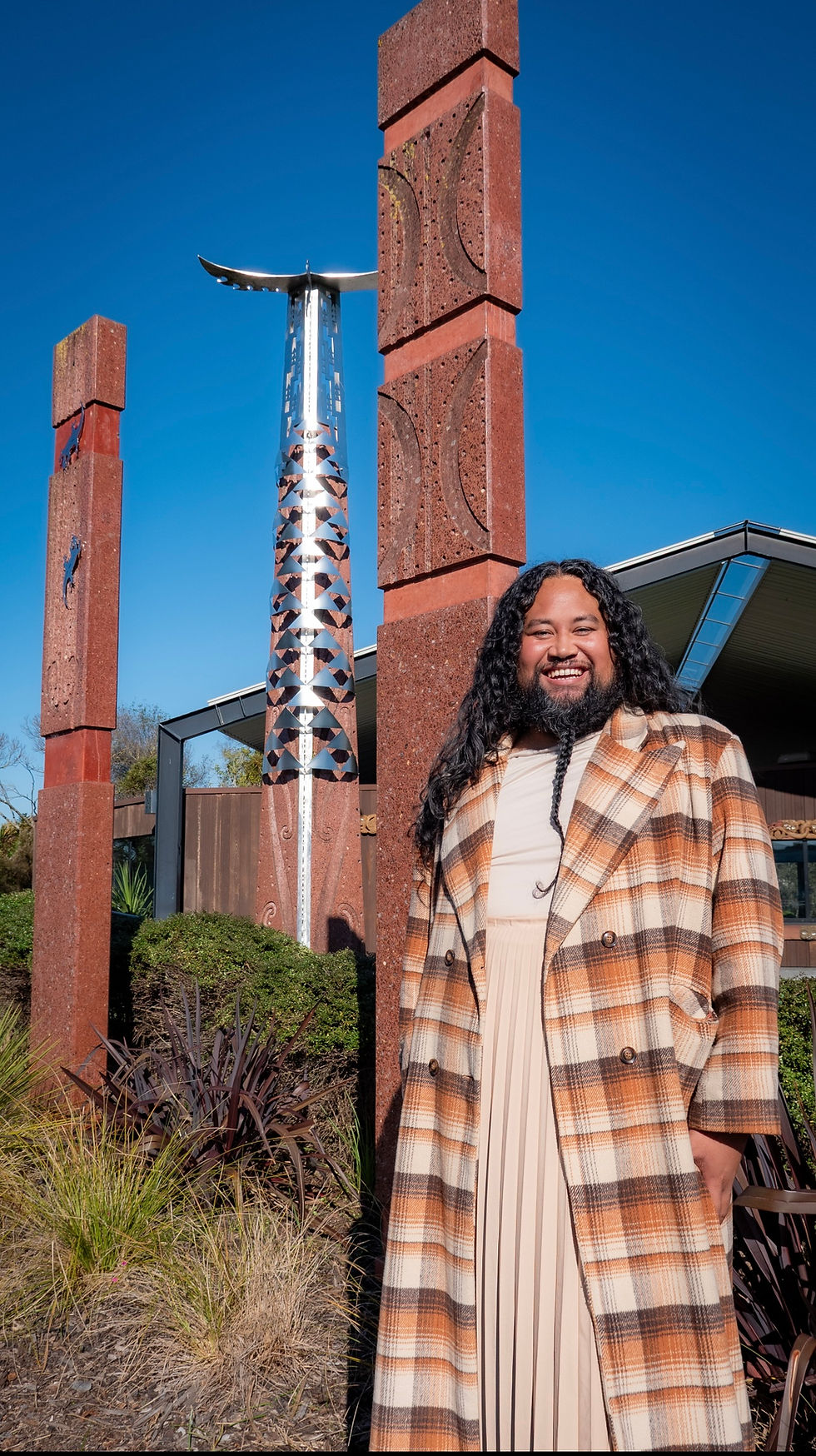
As we celebrate Samoa Language Week 2026, we are proud to spotlight APSTE member Moe Nanai. In this talanoa, Moe reflects on her journey, what being Samoan means to her, and the role language plays in shaping identity, belonging, and connection. Her story is a powerful reminder of the importance of nurturing our gagana and aganu'u, and carrying these treasures forward for future generations.
Tell us a little about yourself and your role
"Talofa lava, my name is Moemoeolemalotumua Nanai, and I am the Pasifika Learning Advisor at Te Herenga Waka. My family comes from the villages of Pata Falelatai, Malie, and Lalomauga.
I’ve been in the education space for a while now — first as a teacher, and now in the tertiary sector. In my current role, I support students (Pasifika and non-Pasifika) with their academic and study skills through one-on-one appointments and workshops.
Outside of work, I’m a mother to an energetic, quirky five-year-old boy, the youngest of three daughters, a Sunday School teacher, and a poet."
What does being Samoan mean to you?
"It’s the centre of my being — the blood that connects me to everyone I love. It’s the reason I work the way I work and move the way I move. It’s a hat that never comes off.
The way I approach people, the way I build relationships, the way I support my peers and students — all of it is shaped by the Samoan values and teachings that raised me.
Being Samoan isn’t something I step into and out of. It’s something that lives in me, always."
Why is Samoan Language Week important to you?
"We need to celebrate the progression of our culture and our language. Especially for those of us living outside the homeland, SLW becomes a week where we can step outside of our everyday routines and really reflect on how vital our aganu’u and gagana are.
It’s also about connection — our fa’asinomaga, our sense of identity, and how that identity links us not only to our island, but to our entire ocean of people. SLW reminds us that even across distance, our cultural threads still bind us to one another, and that our language continues to anchor us in who we are."

Is there a Samoan word, phrase, or value that is special to you?
"There are many phrases I hold close, and which one speaks the loudest often depends on the season I’m in. But right now, “Tautuanā le tofi ne'i vale tu'ulima” is the one I carry in my heart. It’s a reminder to be mindful of the inheritance you hold — because it can be lost or mishandled if you’re not paying attention.
I return to this often as I think about the cultural richness I’ve inherited from my parents, my family, and the communities that raised me. It reminds me of the responsibility I have to pass that on to my son and to the younger Samoan students I work with.
Being Samoan in the space I work in is a blessing, but it also comes with an obligation — to hold tightly to what I’ve been given, to treasure my tofi, and to make sure it doesn’t slip through my fingers."

What is something you would love others to know about Samoa or Samoan culture?
"Honestly, sometimes I think we deserve at least a month of bereavement leave — jokes, but also… not really.
What I’ve learned is that we come from a communal way of being, one built on a kind of cultural intelligence that, when fully recognised, could reshape entire education systems. We don’t think in silos. No idea stands alone. Everything is connected to people, relationships, obligations, and the wider collective.
And because of that, many of us have learned to adapt and code-switch to fit into spaces that weren’t built with us in mind. You might see just one brown face in the room, but behind that is someone carrying their family, their church, their community, and their cultural worldview — all at once.
Even when we sit quietly, our minds are singing our own songs, thinking about how what we learn or achieve can ripple outward to help the people we love. That’s the part that often goes unseen, but it’s the part that makes us who we are."
How do you stay connected to your culture and language or community?
"I’m blessed that my parents were strong and deeply traditional when it came to Samoan language and culture. I also grew up in the EFKS church in Porirua, and being surrounded by that environment for most of my life meant the language stayed close to me.
But I’m not as fluent as I once was. There was a period where university became my whole world — long hours, constant deadlines, and hardly any time at home or at church. And that’s when the shift happened. Language loss doesn’t hit you all at once; it’s gradual, quiet, and consistent. Even one or two years away from your language nests can make a huge difference in whether you maintain fluency or not.
I didn’t realise it was happening to me until much later.
The last five years, though, have felt like reclaiming my inheritance — slowly, intentionally, and with a lot more awareness of how precious it is."

What does the Samoan language mean to you personally?
"It really does come back to connection. Language keeps culture alive, and culture keeps language breathing (shoutout to Galumalemana Hunkin!). It’s how we speak to our elders, how we understand their stories, how we translate their world into ours. I know this can be a tough space for many, especially with the constant debate about whether speaking Samoan determines if you’re a “real” Samoan.
But to me, language isn’t one-dimensional. It isn’t just spoken. It can be sung, danced, chanted, written in a poem, or expressed in a bilingual essay full of imperfect grammar. Language is a bridge — shaping how you think, how you write, how you carry yourself. And no matter how small, strong, shaky, or still-in-progress your bridge is, it still connects you to something or someone.
One of my favourite things about SLW is seeing people share their language journeys. It’s beautiful to witness the reclaiming happening in real time. For so long, the loudest question in our community was, “Am I Samoan enough?”
Now people are standing up and saying, “YES, I AM SAMOAN — and I’m trying.”
And honestly, that’s exactly what it should be about."
Is there a message or encouragement you would share with others during Samoan Language Week?
"Don’t feel insecure about your language ability. Some of us were privileged to grow up with it, and some of us weren’t. Cultural and language trauma is real, and it deserves far more open conversation. As a community, we also need to be more forgiving and supportive, especially toward those who have experienced language loss for any reason. So, this is my hope, that if you’re beginning your reclaiming journey—or even just learning a little Samoan—you do it with joy. Not to prove your heritage to anyone else, but as a proud, personal declaration of identity for yourself and your family."